
Motion design has become one of the most effective ways for brands to communicate in a fast-moving digital world. From social media feeds to product interfaces, motion helps brands capture attention, explain ideas quickly, and create memorable experiences. As audiences increasingly favor video and animated content, motion design is no longer optional for modern marketing.
Many brands now choose to outsource motion design services instead of relying solely on in-house teams. Outsourcing provides access to specialized talent, faster production cycles, and consistent quality across platforms. This article explores what motion design services are, why brands invest in them, and highlights ten motion design service providers that are well-suited for startups, growing businesses, and mid-sized teams in 2026.
What Are Motion Design Services?
Motion design services involve creating animated visual content that combines design, movement, timing, and sound. Unlike traditional animation, motion design focuses heavily on communication and branding rather than storytelling alone. It is often used to enhance marketing messages, explain products, and elevate user experiences.
These services are commonly used in explainer videos, product demos, UI animations, social media content, digital ads, and brand motion systems. Motion design helps transform static visuals into dynamic assets that guide attention and improve comprehension.
Raw footage to polished video — let’s make it happen with MonkyVision.
Why Brands Outsource Motion Design Services
Brands outsource motion design services to gain speed, flexibility, and access to expert talent. Motion design requires specialized skills, tools, and workflows that are difficult to scale internally. External partners help brands produce high-quality motion assets without increasing operational overhead.
Outsourcing also ensures consistency. Motion design studios often build repeatable systems and style frameworks that keep animations aligned with brand identity. For growing teams, this approach allows motion content to scale alongside marketing needs while maintaining quality and clarity.
Top 10 Motion Design Services in 2026
1. Monkyvision
Monkyvision provides motion design services that blend strategic thinking with creative execution. The team focuses on using motion as a communication tool rather than decoration, ensuring every animation supports a clear business or marketing objective. Their services cover explainer videos, social media animations, product visuals, and brand-led motion systems.
What makes Monkyvision stand out is its emphasis on clarity and performance. Motion assets are designed to simplify complex messaging, improve engagement, and fit seamlessly into broader brand strategies. This approach helps brands create motion content that is both visually compelling and results-driven.
Pros:
- Strategy-led motion design
- Strong focus on clarity and engagement
- Scalable for growing brands
Cons:
- Smaller team compared to global studios
Best suitable for: Startups, SaaS companies, DTC brands, and marketing teams focused on performance
2. Superside
Superside offers motion design as part of a larger creative services ecosystem. Their motion design services include animated explainers, UI motion, social graphics, and campaign animations. The focus is on delivering consistent motion assets at scale through streamlined workflows.
Superside’s model is well-suited for teams that need frequent motion content and predictable delivery timelines. The collaborative process allows brands to integrate motion into ongoing marketing campaigns with minimal friction.
Pros:
- Fast turnaround times
- Integrated with other design services
Cons:
- Can feel less customized for smaller projects
Best suitable for: Marketing teams with ongoing motion needs
3. Duck.design
Duck.design specializes in clean, modern motion graphics that emphasize clarity and usability. Their motion design services are often used for product explainers, educational content, and marketing visuals that require a polished and professional look.
The studio focuses on smooth transitions, balanced pacing, and strong visual hierarchy. This makes their motion design particularly effective for brands that need to communicate information clearly without overwhelming the audience.
Pros:
- Clean and consistent motion style
- Strong focus on product communication
Cons:
- Limited experimental or high-energy styles
Best suitable for: SaaS products, tech platforms, and educational content
4. Vidico
Vidico approaches motion design with a strong storytelling mindset. Their services are often integrated into larger video production projects, combining scripting, visuals, and motion to create engaging brand narratives.
Vidico’s motion graphics work is particularly effective for product launches and marketing campaigns that rely on video as a primary medium. Their experience in video storytelling adds depth and structure to motion-driven content.
Pros:
- Strong narrative approach
- High production quality
Cons:
- Higher cost than basic motion services
Best suitable for: Product launches and campaign-focused video content
5. Creamy Animation
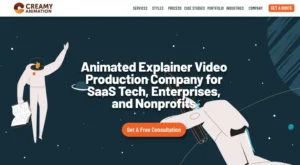
Creamy Animation delivers motion graphics that feel playful, expressive, and energetic. Their work often features character animation, bold colors, and dynamic movement that grabs attention quickly.
This style works especially well for brands that want to appear approachable and engaging. Creamy Animation’s motion design services are commonly used for explainers, social campaigns, and promotional videos.
Pros:
- Highly engaging and expressive motion
- Strong character animation capabilities
Cons:
- Not ideal for minimal or corporate branding
Best suitable for: Consumer brands, startups, and social-first campaigns
6. Cueball Creatives
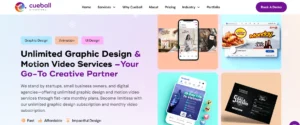
Cueball Creatives offers motion graphics design that prioritizes communication and structure. Their motion services support marketing, product storytelling, and branded content that needs to deliver clear messages efficiently.
The studio focuses on combining motion with design principles to ensure animations enhance understanding rather than distract from the message. Their work is practical, polished, and business-focused.
Pros:
- Clear and professional visuals
- Strong communication-driven design
Cons:
- Less emphasis on experimental motion
Best suitable for: Marketing campaigns and product explainers
7. Penji
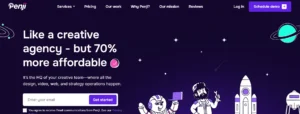
Penji provides motion graphics services through a subscription-based model. This allows brands to request motion assets continuously without renegotiating contracts or budgets for each project.
The service is designed for efficiency and volume. While individual animations may be simpler, Penji’s strength lies in its ability to support ongoing motion needs for growing teams.
Pros:
- Predictable pricing
- Unlimited requests model
Cons:
- Creative depth may vary
Best suitable for: Brands with frequent motion design requirements
8. Designity
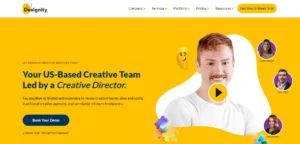
Designity combines motion design with a collaborative creative process. Their model connects brands with vetted designers who work closely with internal teams to produce brand-aligned motion content.
This approach ensures motion assets are customized rather than templated. Designity’s services work well for teams that want both flexibility and quality control across motion projects.
Pros:
- Vetted creative talent
- Collaborative workflow
Cons:
- Requires onboarding time
Best suitable for: Mid-sized teams seeking tailored motion support
9. Kasra Design
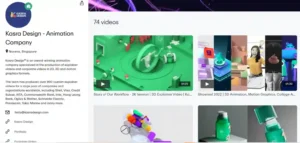
Kasra Design is known for artistic and visually rich motion graphics. Their work often leans toward cinematic storytelling and premium visual execution.
The studio’s motion design services are well-suited for brands that want visually striking animations with strong emotional appeal. This makes their work effective for brand films and high-impact presentations.
Pros:
- Distinct artistic style
- Strong storytelling visuals
Cons:
- Less suited for minimalist brands
Best suitable for: Premium and visually driven brand campaigns
10. Delesign
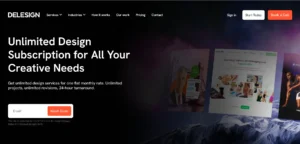
Delesign offers motion graphics as part of a broader design service offering. This allows brands to combine motion design with other creative needs such as graphic design and branding.
Their flexible service model makes Delesign a practical choice for businesses that want motion content integrated into a wider design workflow rather than managed separately.
Pros:
- Cost-effective bundled services
- Flexible design support
Cons:
- Motion is not the sole focus
Best suitable for: Brands needing motion alongside general design services
Discover how animated explainers can simplify complex ideas and boost audience engagement.
Raw footage to polished video — let MonkyVision bring your story to life.
How to Choose the Right Motion Design Service
- Review motion design portfolios carefully
Look for clarity, pacing, and storytelling rather than just visual effects. The motion style should match your brand tone and audience expectations. - Check brand alignment experience
Choose a provider that understands how to adapt motion design to brand guidelines, not one that applies the same animation style to every project. - Evaluate storytelling and communication skills
Strong motion design explains ideas clearly. The service should simplify complex messages instead of making them more complicated. - Understand turnaround time and workflows
Ask about timelines, revision rounds, and feedback processes to ensure delivery speed aligns with your content schedule. - Assess scalability for ongoing needs
The right partner should be able to handle increased volume without sacrificing quality as your motion design needs grow. - Check collaboration and communication style
Clear communication, structured feedback loops, and dedicated points of contact reduce delays and rework. - Look for performance and outcome focus
Motion design should support engagement, retention, or conversion goals, not just visual appeal. - Compare pricing transparency
Ensure costs are clear and aligned with scope. Avoid providers with vague pricing or unclear deliverables.
Common Mistakes to Avoid When Hiring Motion Design Services
- Choosing visuals over clarity: Overly complex animations may look impressive but fail to communicate the message effectively.
- Ignoring brand consistency: Motion assets that do not follow brand rules can weaken identity across platforms.
- Overloading animations with effects: Excessive motion can distract users and reduce comprehension. Simplicity often performs better.
- Not defining objectives upfront: Without clear goals, motion design may lack direction and measurable impact.
- Underestimating production timelines: Motion design takes planning. Rushing timelines often leads to compromised quality.
- Hiring without reviewing real case studies: Portfolios without context make it difficult to assess problem-solving ability and results.
- Failing to plan for scalability: One-off animations without reusable systems limit long-term efficiency.
- Assuming motion design guarantees ROI: Motion alone does not drive results unless paired with strong messaging and strategy.
Your vision deserves a stunning finish — let’s edit something great together.
Conclusion
Motion design services have become an essential part of how modern brands communicate, educate, and engage their audiences. When done right, motion design goes beyond visual appeal and helps simplify complex ideas, reinforce brand identity, and create more memorable digital experiences across platforms.
Choosing the right motion design service is not about selecting the most elaborate animations, but about finding a partner that understands storytelling, clarity, and brand consistency. The strongest motion design teams combine creative execution with strategic thinking to ensure every animation serves a clear purpose.
For brands looking to invest in motion design that supports long-term growth, Monkyvision offers a thoughtful approach that balances creativity with performance. By focusing on clear messaging, scalable workflows, and brand-aligned motion, Monkyvision helps businesses turn motion design into a meaningful and measurable asset.
FAQs
1. What business problems do motion design services solve?
Motion design services help businesses improve engagement, explain complex ideas faster, and increase message retention. They are commonly used to simplify product features, strengthen brand identity, support marketing campaigns, and make digital experiences more intuitive and memorable.
2. Are motion design services worth the investment for growing businesses?
Yes. Motion design delivers higher engagement and clarity compared to static visuals. For growing businesses, it improves communication efficiency, supports marketing performance, and reduces long-term content costs by creating reusable and scalable visual assets.
3. How do motion design services contribute to marketing ROI?
Motion design improves click-through rates, watch time, and audience retention. When aligned with strategy, it helps convert attention into action by guiding viewers through messaging clearly, which leads to better campaign performance and stronger return on marketing spend.
4. When should a business outsource motion design instead of hiring in-house?
Outsourcing is ideal when motion needs increase quickly, require specialized skills, or demand faster turnaround. It allows businesses to scale production without hiring full-time designers and avoids the cost of managing tools, workflows, and creative resources internally.